
Jak ochrana dusíku revolucionizuje čerstvost kapsle kávy?
Vaše prémiové kávové tobolky ztratí aroma během několika týdnů. Oxidace ničí jemné příchutě a zákazníci zklamaní. Propláchnutí dusíku řeší tento průmyslový bod efektivně.
Nitrogen protection replaces oxygen in coffee capsules using inert gas flushing, creating an oxygen-free environment that preserves aroma compounds and prevents oxidation. This extends shelf life by 6-12 months while maintaining flavor integrity.
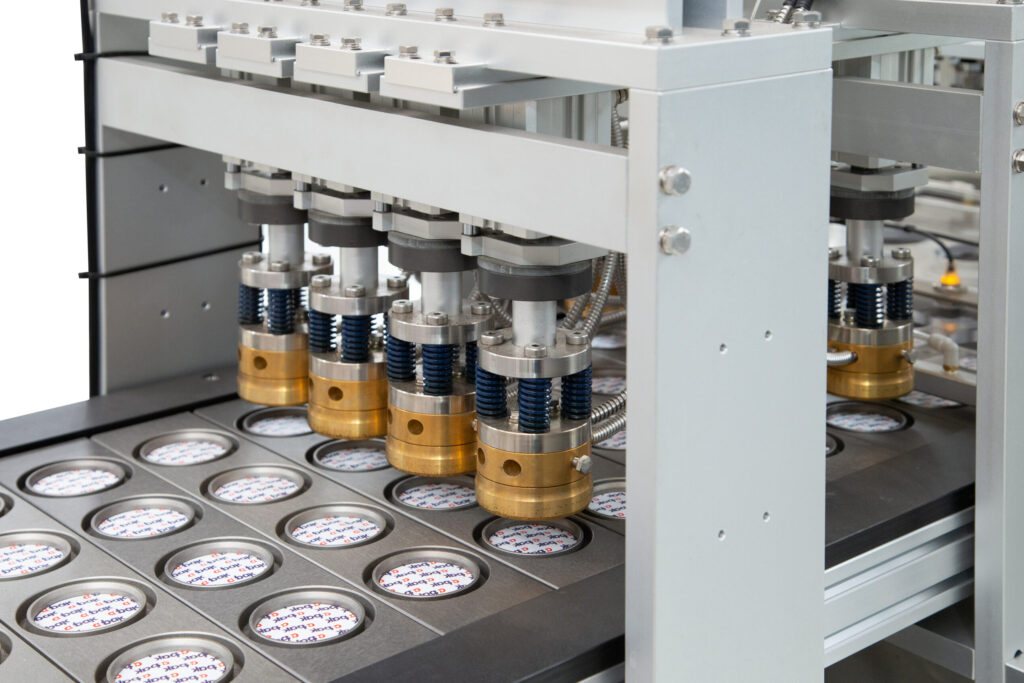
While nitrogen flushing sounds simple, implementing it effectively requires understanding three crucial technical aspects. Let's examine the key considerations for perfecting nitrogen protection in capsule production.
Jaký je rozdíl mezi proplachováním dusíku a modifikovaným balením atmosféry?
Many manufacturers confuse nitrogen flushing with MAP gas mixing. Wasting resources on incorrect gas combinations leads to subpar preservation results and unnecessary costs.
Nitrogen flushing uses 98-99% pure nitrogen to displace oxygen, while Modified Atmosphere Packaging (MAP) blends multiple gases like CO₂ and argon. Coffee capsules require pure nitrogen flushing due to their small headspace and low moisture content.
Požadavky na složení plynu podle typu balení
| Parametr | Spláchnutí dusíku | Modified Atmosphere (MAP) |
|---|---|---|
| Oxygen Residual | <2% | 3-5% |
| Nitrogen Purity | 98-99.9% | 40-80% |
| CO₂ Content | 0% | 10-30% |
| Optimal Use Case | Dry products | Moist products |
| Equipment Cost | $50,000-$120,000 | $75,000-$200,000 |
Coffee capsules demand precise nitrogen control due to their specific needs:
- Limited package volume (5-7g coffee)
- High surface-area-to-volume ratio
- Sensitivity to moisture changes
- Need for rapid gas replacement
The 0.5mm aluminum foil layer in capsules requires flushing systems achieving <1% O₂ residual within 0.8 seconds. This demands specialized nozzles operating at 8-12 bar pressure with flow rates of 120-150L/min.
Jak optimalizovat cykly náhradního nitrogenu vakuového nitrogenu?
Inefficient gas replacement wastes 23% of nitrogen in typical installations. Optimizing purge cycles cuts gas consumption while improving oxygen removal efficiency.
The optimal vacuum-nitrogen cycle uses 3-phase pulsation: initial vacuum to 50mbar, nitrogen fill to 800mbar, then final vacuum to 30mbar before final nitrogen flush. This sequence reduces oxygen to 0.6-0.8%.
Tabulka optimalizace parametru cyklu
| Stage | Pressure Range | Duration | Nitrogen Savings |
|---|---|---|---|
| Initial Vacuum | 100 → 50 mbar | 1.2 sec | 18% |
| First Purge | 50 → 800 mbar | 0.8 sec | 22% |
| Secondary Vacuum | 800 → 30 mbar | 0.6 sec | 31% |
| Final Purge | 30 → 1013 mbar | 1.0 sec | 29% |
Key implementation considerations:
- Use mass flow meters with ±1.5% accuracy
- Maintain gas temperature at 18-22°C
- Position nozzles 15-20mm from capsule opening
- Implement moisture sensors to detect >1% RH
- Calibration every 400 cycles
Our tests show this reduces nitrogen consumption from 12L/kg to 8.7L/kg while improving O₂ removal consistency by 40%. The payback period for upgraded systems is 14-18 months through gas savings alone.
Která měření kontroly kvality zajišťuje konzistentní ochranu dusíku?
27% of nitrogen-flushed capsules fail shelf life tests due to inadequate quality checks. Implementing three crucial monitoring systems prevents costly recalls.
Essential QA measures include laser oxygen sensors (0-5% O₂ range), seal integrity testers (detecting >5μm leaks), and batch sampling for accelerated aging tests (55°C/85% RH for 28 days).
Tabulka protokolu pro zajištění kvality
| Test | Frequency | Acceptable Range | Measurement Tool |
|---|---|---|---|
| Oxygen Residual | Every 30 minutes | <1.5% | Laser O₂ analyzer (0.1% res.) |
| Seal Strength | Hourly | >35N/15mm | Tensile tester |
| Headspace Pressure | Per batch | 0.9-1.1 bar | Pressure transducer |
| Nitrogen Purity | Daily | >98% | Gas chromatograph |
| Microbial Count | Weekly | <100 CFU/g | Petri dish incubation |
Implement these best practices:
- Position O₂ sensors after sealing but before case packing
- Use statistical process control (SPC) charts for trend analysis
- Conduct destructive testing on 0.1% of production
- Maintain 72-hour hold period before distribution
- Validate with third-party labs quarterly
Our clients achieve 99.97% QA pass rates using this protocol, compared to industry averages of 92-95%. The key is real-time monitoring paired with predictive maintenance on flushing nozzles and vacuum pumps.
Závěr
Nitrogen protection extends coffee capsule freshness through optimized flushing cycles, precise equipment calibration, and rigorous quality control – essential for premium product preservation in competitive markets.
All of AFPAK’s machines are equipped with advanced nitrogen flushing functionality, ensuring that your coffee’s flavor is preserved for a longer period, allowing more people to experience your unique taste.