
Benutzen K-Cup-Pods für deinen Kaffee ist super praktisch, oder? Aber wenn man sich den Preis pro Tasse anschaut, fragt man sich, warum sie so viel mehr kosten als normaler gemahlener Kaffee.
K-Cup-Pads sind teuer, weil Sie für mehr als nur Kaffee bezahlen. Die Kosten umfassen die komplexe mehrschichtige Verpackung, die vorab abgemessene Kaffeeportion, den aufwendigen Herstellungsprozess mit Spezialmaschinen sowie den damit verbundenen Komfort.
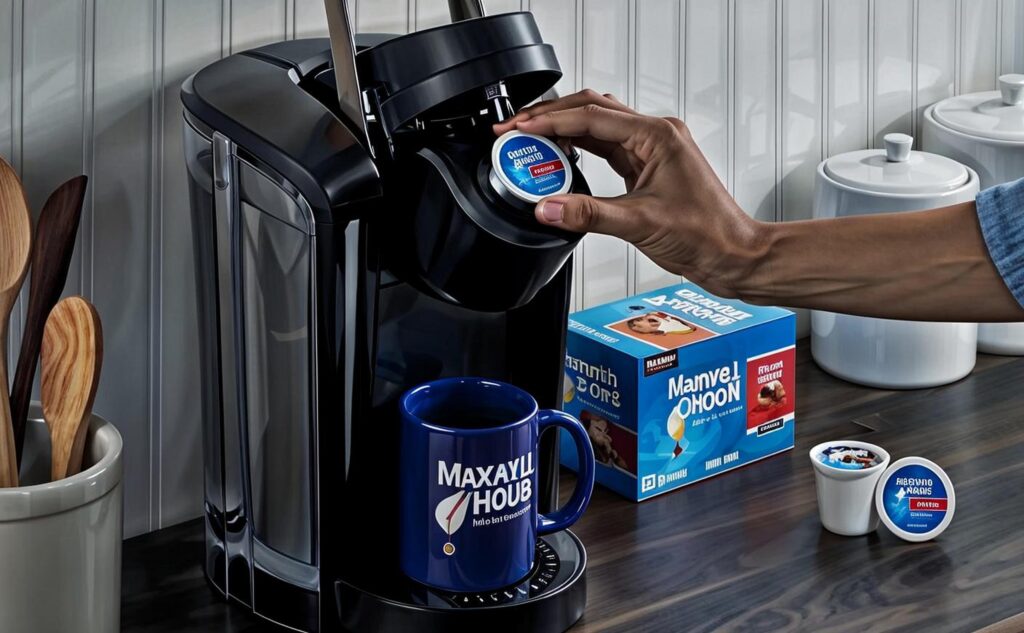
Der höhere Preis ist nicht willkürlich; Es spiegelt mehrere Faktoren wider, vom Material bis zur Herstellung. Um wirklich zu verstehen, ob die Kosten für Sie gerechtfertigt sind, müssen wir uns genauer ansehen, was bei der Herstellung dieser Einzelportionskapsel geschieht. Beginnen wir damit, zu definieren, was ein K-Pod eigentlich ist.
Was genau sind K-Pods und ihre Größen?
Haben Sie den Begriff K-Pod oder K-Cup gehört, sind sich aber nicht sicher, was sie definiert? Es scheint einfach, aber das spezifische Design wirkt sich auf Kosten und Funktion aus. Lassen Sie uns die Grundlagen klären.
K-Pods, besser bekannt als K-Cups, sind Kaffeekapseln für Einzelportionen, die für Keurig-Brühsysteme entwickelt wurden. Sie haben eine Standardgröße, typischerweise 51 mm im Durchmesser, und fassen etwa 8 bis 13 Gramm Kaffeesatz.
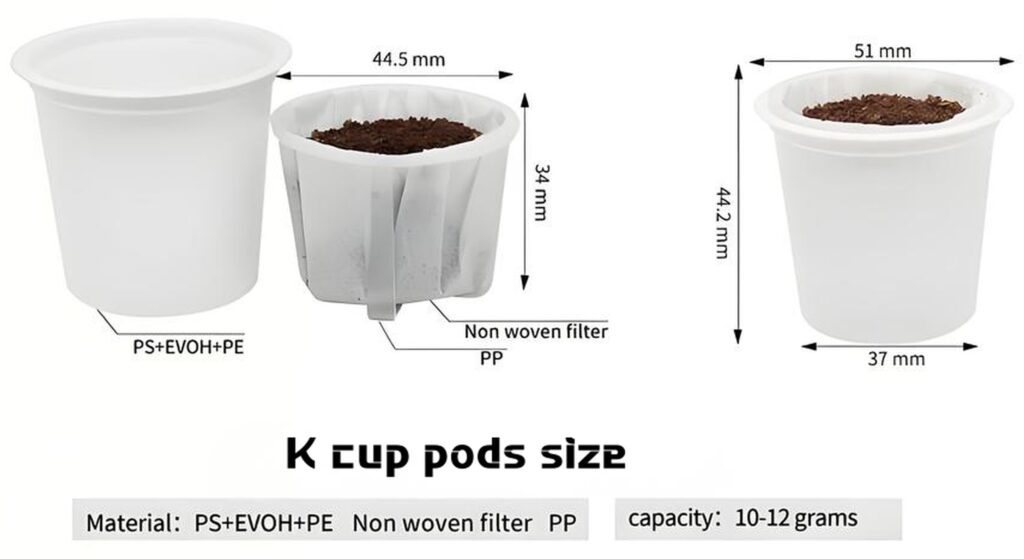
Wenn wir also über K-Pods oder K-Cups sprechen (die Begriffe werden oft synonym verwendet, obwohl K-Cup der offizielle Markenname für Keurigs Pods ist), sprechen wir über ein bestimmtes Format. Diese Standardisierung (Insight 1) ist von entscheidender Bedeutung – sie gewährleistet die Kompatibilität zwischen verschiedenen Keurig-Maschinen. In dieser Standardgröße steckt jedoch ein überraschend komplexes kleines Paket. Es ist nicht nur ein einfacher Plastikbecher.
Der typische K-Cup besteht aus mehreren Komponenten (Einblick 2):
- Der Pokal: Das ist nicht irgendein Plastik. Oft handelt es sich um eine 7-schichtige koextrudierte Kunststoffschale. Warum so komplex? Diese Schichten bilden eine hohe Barriere gegen Sauerstoff, Feuchtigkeit und Licht und halten den Kaffee im Inneren lange frisch. Dieser Spezialkunststoff kostet mehr als ein einfacher Behälter. Ein leerer Bechermantel könnte, selbst mit vorinstalliertem Filter, allein für die Materialien und die Grundformung etwa 0,05 US-Dollar kosten.
Präzisionsgefertigter Verbundkunststoff Nr. 7 (FDA 21 CFR 177.1520-konform) kostet im Jahr 2024 2,42 US-Dollar/Pfund – das entspricht dem 3,6-fachen des Standard-Kaffeebeutelmaterials und macht 38 % des Preises jeder Kapsel aus
- Der Filter: Im Inneren des Bechers befindet sich normalerweise ein Filter, oft aus Vliesstoff oder Papier. Dadurch wird der Kaffeesatz festgehalten, während das Wasser während des Brühens gleichmäßig durchfließen kann. Es muss präzise im Becher verschweißt bzw. befestigt werden.
- Der Kaffee: Zwischen 8 und 13 Gramm gemahlener Kaffee füllen die Kapsel. Die Kosten variieren hier stark je nach Art und Qualität der verwendeten Bohnen.
- Der Deckel: Auf den oberen Rand des Plastikbechers wird ein Deckel aus Aluminiumfolie aufgeschweißt. Dies sorgt für den endgültigen luftdichten Abschluss. Die Folie selbst könnte etwa 0,01 US-Dollar pro Stück kosten.
So tragen die speziellen leeren Verpackungskomponenten bereits vor der Zugabe des Kaffees erheblich zu den Grundkosten des Pads bei. Fügen Sie den Kaffee, die Herstellung und das Branding hinzu, und der Preis steigt weiter. Während die Größe Standard ist, ist die Innenkonstruktion auf Frische und Brühleistung ausgelegt, was die Kosten im Vergleich zu einer einfachen Tüte Kaffee in die Höhe treibt.
Wie oft können K-Cup-Pods verwendet werden?
Angesichts der Kosten fragen Sie sich vielleicht, ob Sie K-Cups wiederverwenden können. Mehr als ein Bier zu kaufen, scheint eine einfache Möglichkeit zu sein, Geld zu sparen, oder?
Standard-K-Cup-Pods sind nur für den einmaligen Gebrauch konzipiert und vorgesehen. Obwohl es wiederverwendbare K-Cup-Filter gibt, sollten die Einweg-Pods selbst aus Sicherheits- und Qualitätsgründen nicht mehr als einmal verwendet werden.
Ich werde manchmal gefragt: Kann man einfach noch einmal Wasser durch denselben K-Cup laufen lassen? Die einfache Antwort lautet: Nein, und hier erfahren Sie, warum. Das System ist für eine Extraktion ausgelegt. Die Kaffeemenge, der Mahlgrad und die Padstruktur sind alle optimiert, um in einem einzigen Brühzyklus ein spezifisches Geschmacksprofil zu liefern. Der Versuch, es wiederzuverwenden, führt zu einer schwachen, wässrigen und im Allgemeinen unangenehmen Tasse Kaffee, da alle gewünschten Geschmacksstoffe beim ersten Mal extrahiert wurden.
Furthermore, the pod is physically altered during brewing. The machine punctures the foil lid and the bottom of the plastic cup to allow water flow. Reusing a punctured pod could lead to grounds leaking into your coffee or even potentially damaging the brewer mechanism.
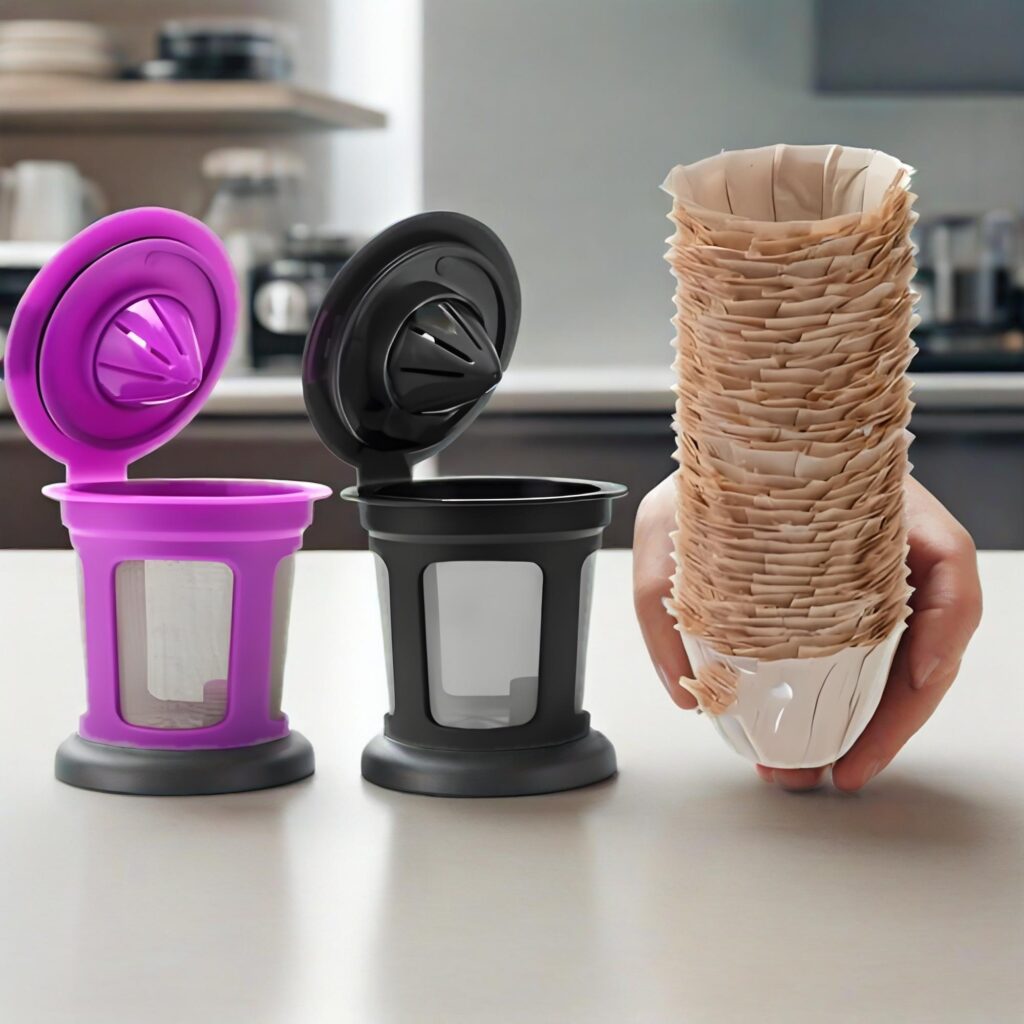
However, if reducing waste and cost is your goal, there's a good alternative: reusable K-Cup filters (Insight 4). These are essentially empty filter baskets shaped like a K-Cup that you fill with your own ground coffee. You use it, empty the grounds, rinse it, and it's ready for the next cup. This definitely lowers the cost per cup and reduces waste. The trade-off? You lose some of the convenience – you have to handle ground coffee and clean the filter after each use, which is precisely the work single-use pods eliminate. So, while the disposable pods are strictly single-use, reusable options cater to those prioritizing cost and environmental factors over maximum convenience.
Gibt es eine bessere Option als Keurig?
Keurig is popular, but is it the best choice? High pod costs and environmental concerns might make you look for alternatives. Let's explore if other systems offer better value.
"Better" depends on your priorities. Nespresso offers espresso-style pods (often recyclable aluminum), drip machines are cheaper per cup, and French presses offer control. Keurig excels in convenience and flavor variety.
When considering alternatives to Keurig and its K-Cups, "better" really depends on what you value most: cost, convenience, coffee style, or environmental impact. Let's compare:
- Nespresso: Often seen as the other major pod system. Nespresso focuses on espresso and espresso-based drinks. Their pods are typically aluminum, which is highly recyclable Wenn you use their recycling program. The cost per pod can be similar to or slightly higher than K-Cups, and the coffee style is different (stronger, smaller servings).
- Traditional Drip Coffee Makers: These are the classic countertop machines. The cost per cup using ground coffee is significantly lower than K-Cups (Insight 5). You can brew larger quantities at once. The downside is the lack of single-serving convenience, the need for measuring coffee, potentially longer brew times, and more cleanup.
- French Press / Pour Over: These manual methods offer excellent control over the brewing process and are very inexpensive after the initial equipment purchase. Cost per cup is low (just ground coffee). However, they require the most effort and time – grinding beans, heating water, timing the brew, and significant cleanup.
- Other Pod Systems: Brands like Lavazza have their own pod systems, often plastic-based like K-Cups, competing in a similar space.
So, is there a better option?
- If lowest cost per cup is key, drip coffee or manual methods win.
- If you prefer Espresso, Nespresso might be better.
- If maximum convenience and variety are paramount, Keurig is hard to beat. K-Cups offer an enormous range of coffee brands, flavors, and even other beverages like tea or hot cocoa (Insight 3), arguably the widest selection available in any pod format.
Keurig's strength, and part of why people pay the premium, lies in its unmatched blend of speed, ease, and choice. Whether another option is "better" depends entirely on balancing those factors against cost and coffee preference.
Ist es günstiger, gemahlenen Kaffee oder K-Cups zu kaufen?
Let's talk straightforward cost: which hits your wallet harder? Comparing the price per cup directly helps justify or question the K-Cup premium.
Buying ground coffee and brewing it traditionally is almost always cheaper per cup than using K-Cups. You pay a significant premium for the convenience and single-serving format of K-Cups.
This is a pretty clear-cut comparison (Insight 5). When you break down the cost, making coffee from a bag of ground beans is much more economical than using K-Cups. Let's look at typical numbers (these can vary widely, but illustrate the point):
- K-Cups: Often range from $0.50 to $1.00+ per pod, depending on the brand and quantity purchased.
- Ground Coffee: A standard 12-ounce bag might cost $8-$15 and yield roughly 30-40 cups (depending on brew strength). This puts the cost per cup somewhere between $0.20 and $0.50.
Clearly, on a per-cup basis, ground coffee wins the price battle, often costing less than half as much as a K-Cup. So why do people pay the K-Cup premium? It boils down to convenience and time.
Making coffee with ground beans involves:
- Getting out the coffee maker.
- Measuring scoops of coffee.
- Dealing with filters (paper or reusable).
- Waiting for a pot to brew (often several minutes).
- Cleaning the carafe, filter basket, and disposing of grounds.
Making coffee with a K-Cup involves:
- Putting a pod in the machine.
- Pressing a button.
- Waiting about a minute for your coffee (Insight 5).
- Tossing the used pod.
For many people, the time saved and the elimination of prep and cleanup are worth the extra cost per cup. You're essentially paying for speed, ease, and zero mess. Whether that trade-off is worth it is a personal calculation, but purely from a cost-of-goods perspective, ground coffee is the cheaper option.
Wie läuft die Herstellung eines K-Pods in der Fabrik ab?
Ever wonder how millions of K-Cups get made? Understanding the manufacturing complexity adds perspective to the final price. It's more involved than just putting coffee in a cup.
Producing a K-Cup involves a high-speed, automated process: loading empty cups, precisely filling them with coffee, flushing with nitrogen for freshness, sealing with a lid, and quality checks throughout.
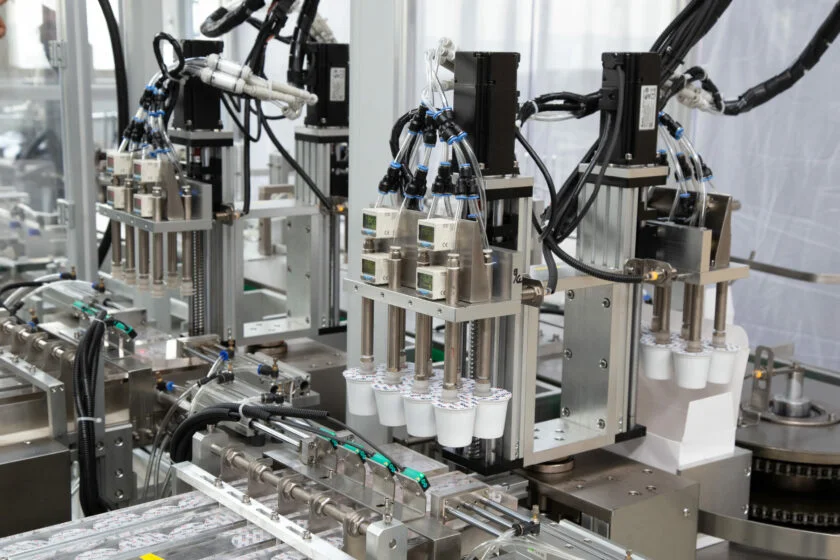
Having been involved in designing and building packaging machinery for years, I know that producing something like a K-Cup consistently and at scale requires sophisticated automation (Insight 6). Here’s a typical factory process:
- Empty Cup Loading: Pre-formed plastic cups (often with the filter already integrated, costing ~$0.05 each as mentioned) are automatically fed into carrier plates on a rotary or linear machine. Advanced machines use sensors to ensure a cup is present before proceeding [^4].
- Coffee Filling: An auger filler or similar dosing system measures a precise amount of ground coffee (8-13g) and dispenses it into the cup. Accuracy is crucial for consistent taste and cost control. This step often happens under a nitrogen gas flush.
- Nitrogen Flushing: This is critical for shelf life. Before sealing, the air inside the pod (which contains oxygen that stales coffee) is replaced with nitrogen, an inert gas[^1]. This process might happen at the filling station and just before sealing to minimize oxygen exposure.
- Lid Placement: Pre-cut foil lids (~$0.01 each) are picked from a stack and precisely placed onto the filled cups. Sensors might check for lid presence before sealing[^4].
- Heat Sealing: A heated sealing head presses the foil lid onto the plastic cup rim, creating an airtight seal. Temperature, pressure, and dwell time must be carefully controlled for a perfect seal without damaging the cup or coffee.
- Ejection & Quality Control: Finished pods are ejected. High-end lines might include checkweighers to verify fill weight, vision systems to inspect seal integrity, or date coding systems. Defective pods are automatically rejected[^4].
This entire process happens at high speeds, often producing hundreds of pods per minute. The machinery involved is complex, requires significant investment, needs maintenance, and must meet food safety standards. Automation, quality control measures like nitrogen flushing[^1], and the sheer speed required all contribute to the manufacturing overhead, which gets factored into the final price of each K-Cup pod.
Abschluss
K-Cups are expensive due to their complex packaging, the coffee inside, the sophisticated manufacturing process ensuring freshness and consistency, and the significant convenience premium they offer compared to traditional brewing methods.