
K-cup demand in North America keeps growing, but tighter sustainability rules and rising labor costs mean small coffee brands must “get the first machine right” or pay for it twice later.
For a small business, the best K-cup filling machine is one that delivers low total cost of ownership (TCO), supports sustainable pod materials (recyclable and biodegradable), and offers quick changeover plus future expandability so you can recover your investment within 1–12 months.
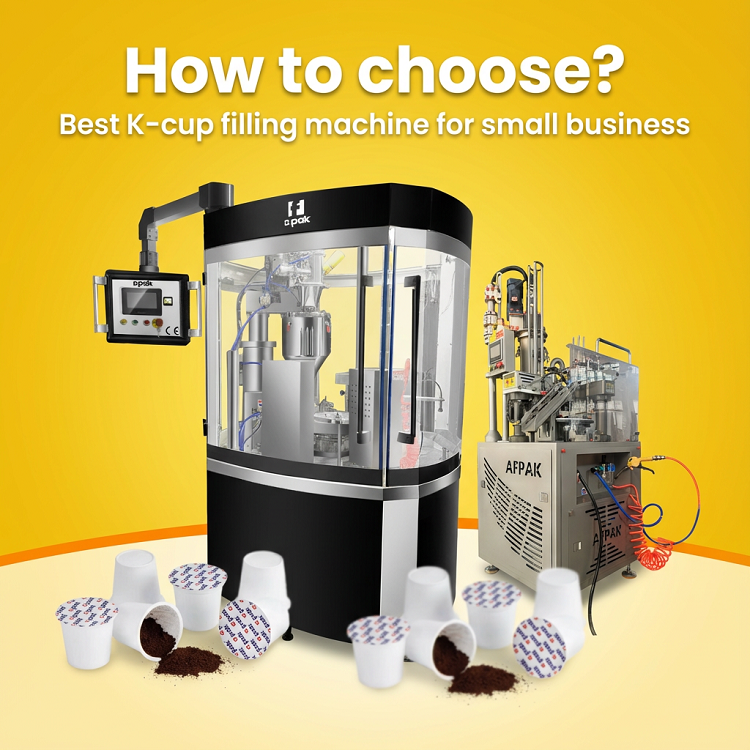
Sustainability regulations, material changes, and growing SKU complexity are all converging on the same point: your K-cup machine is no longer just equipment, it is your core capacity and your compliance “firewall.”
01 From 2026 Onward: Why Sustainability Regulations Make Machine Choice Urgent for Small Coffee Businesses
Single-use plastics, extended producer responsibility, and recyclability requirements are rising across regions. If your K-cup line can only run traditional plastic cups, you risk a forced reinvestment within a few years.
A future-proof K-cup filling machine for 2026+ must minimize waste, support recyclable/biodegradable pods and lids, and use automation to maintain consistent quality with less labor.
Dive Deeper: How Regulation Pressure Translates into Technical Requirements
From the machinery side, sustainability is no longer just “use a greener cup.” It changes how we design and select filling and sealing equipment.
Waste Reduction as a Design Target
A reliable K-cup filling machine reduces waste by dosing coffee accurately and sealing consistently, which cuts down on scrap pods and rework. This is not only a cost issue, it also aligns with regulatory priorities on source reduction and resource efficiency.
For a small plant, every 1% reduction in scrap on a 50,000 cups/day operation is hundreds of pods saved daily.Material Flexibility: From Plastic to Aluminum and Biodegradable
Market-leading suppliers now position themselves as “all-in-one places for comprehensive filling and packaging solutions of coffee capsules,” including machinery and empty capsules/lids. This reflects a real shift:- Machines must handle different cup geometries and stiffness levels.
- Tooling and sealing heads must be designed for aluminum, PP/PS, and bio-based or fiber-based materials.
Automation as Compliance Insurance
Modern lines are designed for high stability and 24/7 operation when required. Automation takes over repetitive filling and sealing tasks, reducing human error and allowing the plant to keep consistent quality and hygiene standards with fewer operators.
This is key when you start shipping to retailers who audit both product quality and production processes.
Jeffree’s Pro Tip:
When you ask suppliers about “sustainability,” do not accept vague answers. Ask specifically which pod materials and lid structures their current customers run (aluminum, compostable, PCR plastics) and request real test data or references. A machine that only runs one type of plastic cup is already half obsolete for 2026.
02 ROI: Compact Fully Automatic vs Semi-Automatic – Which Offers Better TCO for Small Businesses?
Most small roasters and startups face the same question: go semi-automatic and keep CAPEX low, or invest in a compact fully automatic unit from day one?
Semi-automatic K-cup machines offer lower initial cost and are suitable for small daily outputs; compact fully automatic machines bring higher initial CAPEX but much better TCO via reduced labor, higher throughput, and more consistent quality.
Dive Deeper: Quantifying TCO and Payback
Industry guidance is clear: the first step is to define your daily/weekly production volume, then decide the automation level that matches your business stage. For small operations planning only a few hundred to a couple of thousand cups per day, entry-level machines are recommended.
However, “entry-level” doesn’t have to mean semi-auto. Let’s compare:
| Aspecto | Semi-Automatic K-cup Machine | Compact Fully Automatic Machine |
|---|---|---|
| Typical initial cost | Más bajo | Más alto |
| Automation scope | Filling + sealing; manual cup/lid handling | Cup feed, filling, sealing, sometimes downstream tasks |
| Required operators | 2–3 operators | 1 operator |
| Suitable daily volume | Few hundred–couple thousand cups | Thousands–tens of thousands cups |
| Labor cost per cup | High, sensitive to staff skill | Lower, stable |
| Scrap and rework | More operator-dependent | More consistent; less waste |
| Escalabilidad | Limitado | Often modular or speed-upgradable |
| Best use case | Market testing, very small batches | Growth-minded small businesses with real demand |
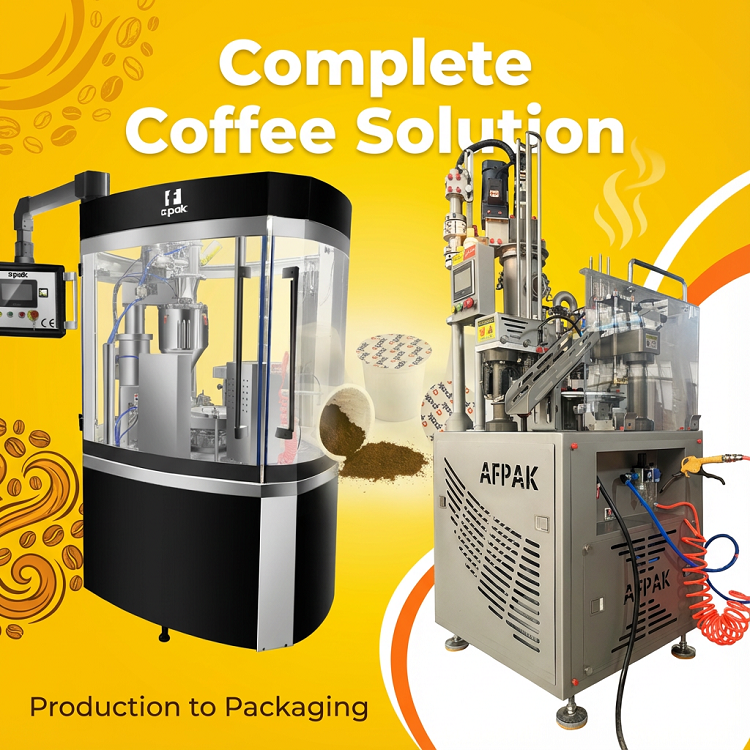
Guides on automatic K-cup selection also emphasize scalability: modular designs that allow speed increases or extra lanes save you from upgrading too soon as your customer base grows.[^4] For most entry-level buyers, semi-automatic is often suggested as a compromise between affordability and efficiency—but that is assuming very modest volume and slow growth.
From my experience at AFPAK, once a brand has any stable B2B or subscription demand, we see compact fully automatic lines pay back surprisingly fast because:
- Labor per cup drops sharply.
- Output per shift increases without adding staff.
- Consistent filling and sealing avoids costly recalls or returns.
Jeffree’s Pro Tip:
When you calculate ROI, do not just divide machine price by monthly margin. Add three “hidden” items:
1) projected scrap/rework reduction,
2) labor saved per shift,
3) the cost of not being able to accept a big order due to limited capacity.
For many small brands, these factors tip the balance in favor of compact full automation.
03 Handling Biodegradable and Fiber-Based K-cups: What Does the Machine Actually Need to Do?
Sustainability is pushing the market toward recyclable aluminum pods and biodegradable/fiber-based capsules. These materials behave very differently from classic plastic cups.
A K-cup filling machine suitable for eco-friendly capsules must support a range of pod sizes and materials, including eco-friendly options, and still deliver precise dosing and reliable seals.
Dive Deeper: Why Eco Materials Are More Demanding – and How the Machine Compensates
Modern K-cup machines are designed with adaptability in mind, enabling fast switches between different coffee blends and pod types without major disruptions.[^4] This adaptability now extends to new materials:
Cup Support and Positioning
Biodegradable and fiber-based cups are often less rigid than PP/PS. If the cup holding and indexing system is not designed for this, you will see:- distorted rims under sealing pressure,
- misaligned seals,
- local overheating or incomplete sealing.
Proper tooling must support the cup wall and rim evenly, with tolerance for variations in cup thickness.
Temperature and Sealing Window
Different lid and cup materials require different sealing temperatures and dwell times. Eco materials tend to have narrower process windows. A robust K-cup machine must therefore offer:- precise, stable temperature control,
- controlled sealing pressure and time,
- uniform temperature distribution across the sealing head.
Pod Variety and Eco Options
Industry players clearly state that their machines can handle a variety of pod sizes and materials, including eco-friendly options. That means:- tooling kits for multiple heights and diameters,
- adjustable forming and sealing parameters,
- optional configurations for aluminum and compostable structures.
Dosing Accuracy with “Dustier” or Lighter Powders
Many eco pods pair with specialty or single-origin coffees ground differently, which can behave more “dusty” or less free-flowing. Consistent dosing becomes even more critical to avoid overfill (leading to seal contamination) or underfill (leading to customer complaints).
Jeffree’s Pro Tip:
Before you sign a purchase order, send the supplier your actual eco pods and lids and ask them to run real trials. Request:
- sealed samples for shelf-life tests;
- parameter sheets for temperature/pressure/time;
- confirmation that the same line can also handle standard plastic or aluminum pods.
If the supplier has never run your material before, you will be the one paying for their learning curve.
04 Small Batches and Many SKUs: Requirements for Quick Changeover and Multi-Product Capability
Most small coffee businesses live on variety: different roasts, flavors, seasonal blends, sometimes even tea or cocoa. That means frequent changeovers and strict hygiene.
For small-batch, multi-flavor strategies, your K-cup machine must allow quick recipe and tooling changes, handle different pod sizes and blends, and be easy to clean so you minimize downtime and cross-contamination risk.[^4]
Dive Deeper: Turning Chaos into a Repeatable Changeover Routine
Modern K-cup machines are designed with adaptability in mind, so manufacturers can switch between different coffee blends and pod types without disrupting production flow. For a small business, this adaptability shows up in three main areas:
Tooling and Format Change
You may need to run:- different cup heights,
- different rim profiles,
- different lid materials.
The machine should offer modular cup carriers and sealing tools so format change is a matter of minutes, not hours.
Recipe Management and Dosing Adjustments
Changing from a dense espresso roast to a lighter flavored coffee (or even tea) changes bulk density and flow characteristics. You need:- programmable recipes (target weight, auger speed, vibrator settings),
- consistent performance after a quick test and adjustment,
- minimal need for mechanical re-tuning.
Cleaning and Hygiene
Every new flavor or product category raises contamination concerns. If you use the same line for coffee and cocoa or functional powders, you must be able to:- easily disassemble product-contact parts,
- access internal surfaces for wipe-downs,
- avoid dead corners and difficult-to-clean pockets.
In practice, a good line lets you switch from one SKU to another with a combination of:
- recipe change on the HMI,
- fast mechanical change of format parts,
- a short clean-down and purge.
Jeffree’s Pro Tip:
During factory acceptance tests, do not only watch the machine run at full speed. Ask the supplier to perform a full changeover between two SKUs: different cup type and different coffee. Time it. Ask how many tools and people they used. That 30–60 minutes per change can make or break your daily planning.
05 Making the Most of Limited Space: Layout and Workflow for Compact K-cup Machines
Many small brands operate in tight spaces: a corner of a roastery, a shared warehouse, or a renovated garage. Floor space is often the real constraint.
Compact coffee capsule solutions focus not only on machine footprint but also on smart layout, ensuring efficient use of limited space while keeping workflows and hygiene under control.
Dive Deeper: Designing a Realistic Layout for Small Facilities
Suppliers highlight that their solutions cover not just the K-cup filling machine but also bagging/cartoning, box packaging, and other downstream steps. For small spaces, this means you must view layout as an integrated system:
Start from Material and People Flows
Define:- how empty cups and lids enter the area,
- how coffee powder arrives (bags, bins, totes),
- where finished cartons leave and where waste goes.
Aim for one-way flows to avoid cross-traffic between raw materials and finished goods.
Choose Compact, Integrated Modules Where Possible
An “all-in-one place” philosophy for coffee capsule packaging solutions can reduce the number of standalone machines you need to fit.[^4] For example:- use a cup-filling-sealing monoblock rather than separate stations,
- integrate simple cartoning or bagging modules downstream.
Keep Service and Cleaning Access
Do not push the machine completely against the wall if it blocks access to panels or product-contact zones. You will need space for:- maintenance,
- cleaning,
- changeovers.
Utility Planning
Plan power, compressed air, and possibly nitrogen lines before placing the machine. Route them overhead or along the wall so they do not obstruct traffic.
Jeffree’s Pro Tip:
Ask your supplier to provide a 2D layout drawing showing the machine plus minimum working space and material staging zones. Print it, overlay it on your actual floor plan, and simulate: “If I put pallets here and a table there, can two people still move freely without crossing?” This exercise often reveals issues early, when they are still cheap to fix.
06 Avoiding “Coffee Dust Everywhere”: Key Specs for Dosing Accuracy, Nitrogen Flushing, and Dust Control
Nothing kills perceived quality faster than pods with powder all over the rim, or capsules that taste stale after a few weeks.
A reliable K-cup filling machine reduces waste by dosing the correct amount of coffee into each pod, keeps seals consistently perfect, and uses automation plus proper dust management to cut scrap and labor.[^4]
Dive Deeper: What Technically Defines “Clean and Accurate” Filling?
A comprehensive K-cup system must address three things at once: weight accuracy, oxygen control, and dust management.
Accurate, Consistent Dosing
High-quality K-cup machines achieve precise and repeatable dosing so that each pod contains the right amount of coffee.[^4] This:- protects your cost structure by avoiding overfill,
- prevents underfill complaints,
- keeps sealing areas clean by avoiding overflow.
Reliable Sealing Under Clean Conditions
Consistent, high-quality seals reduce the need for rework or disposal of defective products.[^4] A well-designed line ensures:- rim areas stay free from powder,
- sealing pressure and temperature are controlled,
- any misfeeds are detected and rejected.
Dust and Waste Reduction
By minimizing dosing variation and keeping the filling zone controlled, reliable machines can drastically reduce waste and ease cleaning work. Less waste means less manual cleanup and lower labor costs.Nitrogen Flushing and Freshness
Freshness is one of the main reasons factories invest in K-cup technology.[^4] This usually goes together with nitrogen flushing and careful sealing:- nitrogen purges oxygen from the cup and/or headspace,
- combined with a good barrier lid and strong seal, it extends shelf life and maintains flavor.
Jeffree’s Pro Tip:
When you evaluate machines, bring your own coffee and run at least a few hundred cups. Then:
- weigh a sample batch and calculate actual weight variation,
- inspect the rims and seals under good light,
- check how much powder accumulates inside the guarding and on the floor after a real run.
A machine that looks “fast” but leaves dust everywhere will cost you dearly in cleaning time, waste, and customer perception.
07 Looking Ahead 3 Years: Trends and Upgrade Paths for Small-Business K-cup Lines
The next three years will see more small brands entering the K-cup market and existing players expanding capacity.
Trend-wise, small businesses will increasingly look for modular, scalable K-cup solutions that integrate filling, sealing, and packaging functions, supported by strong technical expertise and after-sales service from specialized suppliers.
Dive Deeper: Building a Realistic Upgrade Roadmap
Current solution providers position themselves as “all-in-one” partners for coffee capsule filling and packaging, from capsule supply to full lines. For a small business, this ecosystem view offers a natural upgrade path:
Phase 1 – Core Filling and Sealing
Start with a K-cup filling-sealing monoblock, sized to your realistic short-term demand.
Focus: stable quality, low scrap, manageable labor.Phase 2 – Add Downstream Automation
As volume grows, invest in:- cartoning or bagging modules,
- box packaging machines for coffee capsules,
to streamline end-of-line operations.
This converts manual packing steps into continuous, predictable processes.
Phase 3 – Integrate with Upstream and Data Systems
Once you operate multiple SKUs and higher volumes, link your K-cup line with:- roasted coffee silos or grinding systems upstream,
- ERP/MES or order management systems to plan batches,
- basic line monitoring to track uptime, scrap, and OEE.
Throughout these phases, vendor reliability matters. Guides emphasize choosing suppliers with:
- experience in diverse production environments,
- comprehensive technical support and training,
- long-term availability of parts and service.
Jeffree’s Pro Tip:
When you pick your first K-cup machine, you are not just buying a tool—you are choosing a platform and a partner. Ask suppliers what their typical upgrade path looks like for clients that started small and grew. If they cannot give concrete examples of customers who scaled up step by step, be careful.
08 Final Decision: How to Choose the Best “2026-Ready” K-cup Filling Machine for a Small Brand
Bringing everything together, your choice should balance economics, sustainability, and flexibility.
In practical terms, the best 2026-ready K-cup filling machine for a small coffee business is a compact, reliable, and modular automatic line that:
Delivers a strong ROI and manageable TCO
- Matches your current daily volume but offers headroom for growth,
- Reduces labor requirements and scrap rate,
- Keeps maintenance simple and predictable.
Supports current and future pod materials
- Handles standard plastic, aluminum, and eco-friendly capsules and lids,
- Maintains dosing accuracy and seal integrity across materials.
Provides real operational flexibility
- Quick changeover between SKUs and cup types,
- Short cleaning times and easy access to product-contact parts,
- Clear upgrade paths for downstream automation and integration.
If you are unsure where your volumes and SKUs will be in 2–3 years, start by mapping your weekly demand scenarios and space constraints. Then talk with a specialized capsule machinery supplier who can walk you through concrete machine configurations and upgrade paths—not just today’s price tag.