
Berjuang dengan kenaikan harga kopi? Ketidakpastian ini membuat perencanaan menjadi sulit untuk bisnis seperti milik Anda. Mari kita lihat kapan keadaan akan stabil.
Para ahli memperkirakan harga kopi yang tinggi mungkin akan bertahan setidaknya selama 8 bulan ke depan. Faktor-faktor utama seperti cuaca dan permintaan yang kuat terus mendorong kenaikan biaya, dengan harga berjangka saat ini mencapai tingkat yang memprihatinkan. Stabilitas diperkirakan tidak akan terjadi dalam waktu dekat.

Memahami situasi saat ini adalah kuncinya. Mari kita uraikan angka-angka dan alasan di balik tingginya harga ini, dimulai dengan biaya sebenarnya saat ini. Teruslah membaca untuk mendapatkan gambaran lengkapnya.
Berapa Harga Biji Kopi Saat Ini?
Melihat label harga kopi yang mengejutkan? Hal ini mengganggu anggaran dan membuat perkiraan menjadi rumit. Anda memerlukan angka yang jelas untuk membuat rencana secara efektif.
Harga biji kopi saat ini sangat tinggi dan sering berubah-ubah. Misalnya, kontrak berjangka Maret 2025 baru-baru ini mencapai $3,9833 per pon. Harga sangat bergantung pada jenis biji kopi, kualitas, dan perubahan pasar global.
Getting a single "price" bagi biji kopi itu sulit karena pasar terus bergerak. Anggap saja bukan sebagai angka tetap, melainkan sebagai rentang yang berubah setiap hari. Indikator utama yang kami perhatikan adalah pasar berjangka. Baru-baru ini, harga kontrak penyerahan pada bulan Maret 2025 mencapai level tertinggi $3,9833 per pon. Hal ini menunjukkan bahwa pembeli memperkirakan harga akan tetap tinggi hingga tahun depan.
Tentu saja, harga sebenarnya yang Anda bayarkan bergantung pada banyak hal:
- Jenis Kacang: Arabika biasanya harganya lebih mahal daripada Robusta.
- Kualitas & Nilai: Kacang spesial dengan skor tinggi memiliki harga premium.
- Asal: Biji kopi dari daerah tertentu yang terkenal kualitasnya seringkali lebih mahal.
- Volume Pembelian: Membeli dalam jumlah yang lebih besar mungkin memberi Anda harga yang sedikit lebih baik.
- Kondisi Pasar: Berita penawaran dan permintaan sehari-hari menyebabkan fluktuasi.
Dalam pengalaman saya menjalankan AFPAK, saya melihat klien terkejut dengan betapa cepatnya perubahan harga. Hal ini menyoroti betapa pentingnya untuk selalu mengetahui tren pasar ketika berhadapan dengan produk pertanian seperti kopi.
Mengapa Biji Kopi Saat Ini Mahal?
Ingin tahu mengapa anggaran kopi Anda terbatas? Kenaikan biaya yang tiba-tiba ini merugikan profitabilitas. Memahami penyebabnya membantu Anda mempersiapkan diri.
Cuaca buruk, terutama kekeringan dan panas saat berbunga, mengurangi pasokan secara signifikan. Pada saat yang sama, permintaan tetap kuat dan pemasok menghadapi tekanan. Tingkat persediaan saat ini yang sangat rendah juga mendorong harga lebih tinggi.
Beberapa faktor bekerja sama untuk mendorong harga kopi naik saat ini. Salah satu faktor utama adalah cuaca. Daerah-daerah penghasil minyak utama, khususnya di Brasil (produsen terbesar di dunia), menghadapi kekeringan parah dan suhu tinggi. Hal ini terjadi pada saat-saat krusial, seperti saat tanaman kopi sedang berbunga, yang berdampak langsung pada jumlah biji kopi yang dihasilkan. Sederhananya, lebih sedikit kopi yang dipanen.
Pada saat yang sama, permintaan kopi global belum melambat. Orang-orang masih menginginkan minuman sehari-hari mereka. Yang menambah masalah adalah beberapa pemasok tampaknya menjanjikan lebih banyak kopi daripada sumber yang bisa mereka beli, sehingga menciptakan kekacauan di pasar. Ketidakseimbangan pasokan-permintaan ini adalah resep klasik yang menyebabkan harga lebih tinggi.
Bagian penting lainnya adalah inventaris. Persediaan biji kopi sudah menipis, dan buruknya panen tidak membantu membangun kembali biji kopi tersebut. Laporan terbaru menunjukkan tingkat persediaan sangat terbatas, mungkin hanya sekitar 1,2 juta kantong untuk periode 2024/25. Ketika pasokan cadangan sangat sedikit, gangguan apa pun akan berdampak lebih besar pada harga. Perusahaan pemasok nasional Brasil (CONAB) memperkirakan penurunan total produksi kopi negara itu sebesar 4,4% pada tahun 2025/26, dengan biji Arabika yang paling terkena dampaknya (turun 12,4%). Perkiraan ini semakin mendukung gagasan akan berlanjutnya harga tinggi.
Biji Kopi Apa yang Termahal di Dunia?
Penasaran dengan kopi mewah? Meskipun mungkin tidak untuk penggunaan sehari-hari, mengetahui bagian atasnya menunjukkan nilai kopi. Ini hal yang menarik!
Some coffees fetch incredible prices. Panama Geisha can cost over $10,000/kg at auction. Others like Black Ivory (elephant processed) and Kopi Luwak (civet processed) are famous for unique processing and high cost.
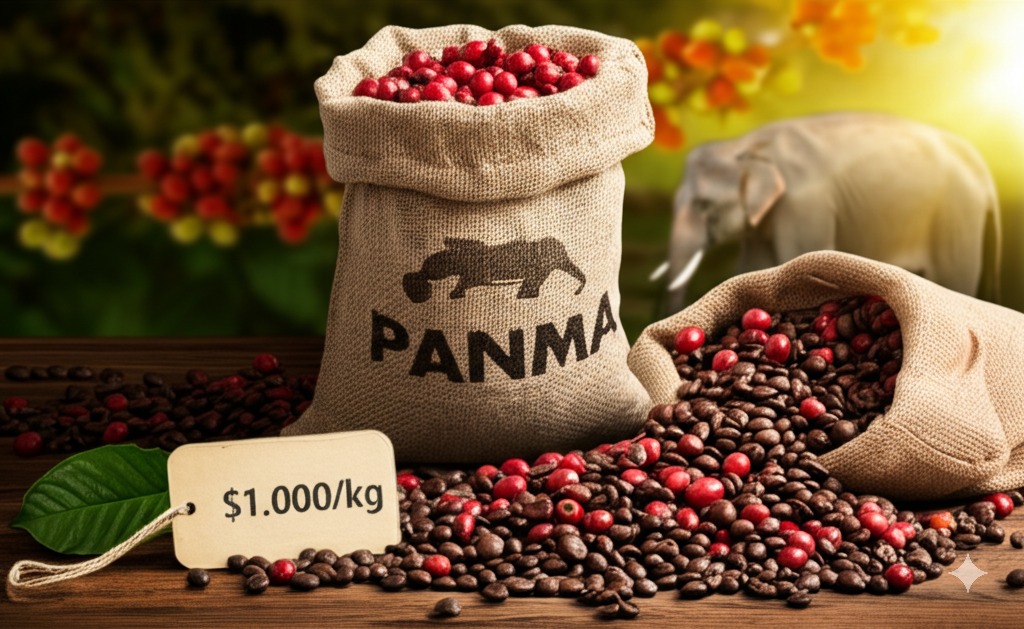
While most of us deal with standard coffee grades, there's a whole other world of ultra-premium, incredibly expensive coffees. These aren't your everyday brews; they are rare, often have unique stories, and command staggering prices. Their cost comes from extreme rarity, complex and sometimes unusual processing methods, exceptional flavor profiles, and high demand from collectors and connoisseurs.
Here are a few examples that really stand out:
| Coffee Name | Approx. Price | Key Feature/Flavor Notes |
|---|---|---|
| Panama Geisha | Up to $10,005/kg (auction) | Highly sought after, known for floral, tea-like, tropical fruit notes |
| Black Ivory Coffee | Around $3,500/kg | Processed through elephants, unique smooth taste, notes of chocolate, fruit |
| Ospina Dynasty | Around $1,580/lb | Grown at high altitudes in Colombia by a historic family, complex flavor |
| Kopi Luwak (Wild) | Up to $1,300/kg | Processed through Asian palm civets, known for rich, smooth taste |
While my work at AFPAK focuses on efficient packaging machinery for more accessible coffees, seeing the prices and processes at this luxury end is always interesting. It shows the incredible value people place on unique coffee experiences. These beans represent the absolute peak of coffee cultivation and processing craftsmanship.
Apakah Harga Kopi Akan Terus Naik di Tahun 2025?
Need to budget for next year? Predicting future costs is vital for business stability. Let's look at the forecasts for 2025.
Yes, signs point to continued high or rising prices into 2025. Brazil's expected lower harvest, very low current stock levels, and strong global demand suggest the upward pressure on prices will persist.
Looking ahead to 2025, the current information suggests that high coffee prices are likely to continue, and they might even rise further. Several key indicators point in this direction.
First, the supply situation doesn't look set to improve quickly. As mentioned, Brazil's official forecast (CONAB) for the 2025/26 harvest, which will impact supply during 2025, predicts a decrease. Specifically, they expect a 4.4% drop overall, with a significant 12.4% reduction in Arabica production. Since Brazil is such a huge player, this shortfall will be felt globally.
Second, existing inventory levels are critically low (around 1.2 million bags estimated for 2024/25). There just isn't much buffer stock to absorb supply shocks or meet unexpected demand spikes.
Third, the market itself seems to be anticipating continued high prices. The fact that March 2025 futures contracts recently traded at $3.9833 per pound shows that professional buyers are locking in supplies at these elevated levels.
Fourth, the overall coffee market is still growing. Projections estimate the global market value reaching nearly $103 billion in 2025, with continued growth expected. Strong underlying demand combined with tight supply usually means prices stay high or go higher. Based on these factors, I'm advising my clients at AFPAK who package coffee products to budget cautiously for 2025.
Biji Kopi Apa yang Paling Populer Dijual di Seluruh Dunia?
Choosing the right coffee bean matters for product success. Knowing the market leader helps understand trends. Let's see which bean dominates.
Arabica is the most sold coffee bean globally, favored for its nuanced flavor. Although Robusta production is increasing slightly, Arabica still dominates the market despite recent production challenges in key regions like Brazil.
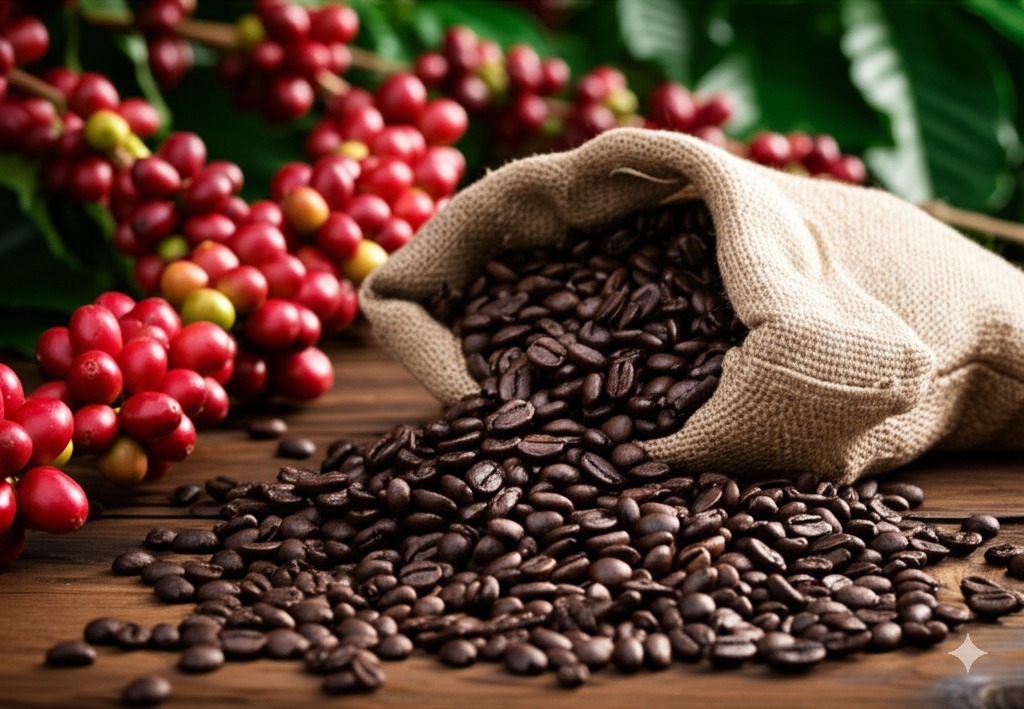
When you look at the global coffee market, one type of bean clearly stands out as the most popular: Arabica. It makes up the majority of the world's coffee consumption. Why? Primarily because of its taste. Arabica beans are known for their complex flavor profiles, aromatic qualities, and smoother taste compared to the other major type, Robusta.
Robusta beans play an important role too, though. They are generally hardier plants, easier to grow in hotter climates, and contain more caffeine. Their flavor is often described as bolder, stronger, and sometimes harsher or more bitter. Robusta is commonly used in espresso blends (for crema and kick) and in instant coffee. While forecasts suggest Robusta production might increase slightly, it's not enough to overtake Arabica's dominance or offset the projected drop in Arabica supply from key producers like Brazil (which grows about 29% of the world's coffee).
Here’s a simple comparison:
| Fitur | Arabica | Robusta |
|---|---|---|
| Market Share | Dominant (Majority) | Smaller, but significant |
| Profil rasa | Smoother, aromatic, complex | Bolder, harsher, more bitter |
| Caffeine | Lebih rendah | Higher (roughly double) |
| Growing Needs | High altitude, specific climate | More adaptable, hotter climates |
| Common Use | Brewed coffee, specialty blends | Espresso blends, instant coffee |
Understanding the difference between these beans is important, even from my perspective in packaging machinery. The type of bean influences the grind, the density, the packaging requirements, and the target market for the final product. The current challenges in Arabica production are a major reason for the price pressures we're seeing across the coffee industry.
Kesimpulan
The skyrocketing coffee bean prices we’re seeing lately? It’s mostly because of a serious mismatch between supply and demand. On one hand, crazy weather—like droughts and heatwaves—has slashed coffee production big time, leaving us with way fewer beans than usual. On the other hand, the demand side isn’t slowing down at all—in fact, it’s getting worse! Middlemen and coffee traders have locked in a ton of contracts, way more than expected, which keeps the demand sky-high. So, with less coffee to go around and buyers still clamoring for more, prices just won’t come down anytime soon.