
사용 K컵 포드 커피는 정말 편리하죠? 하지만 컵당 가격을 보면 왜 일반 분쇄 커피보다 가격이 훨씬 비싼지 궁금합니다.
K-Cup 포드는 커피 그 이상을 지불하기 때문에 비쌉니다. 비용에는 복잡한 다층 포장, 사전 측정된 커피 양, 특수 기계가 포함된 복잡한 제조 공정 및 이들이 제공하는 완전한 편의성이 포함됩니다.
더 높은 가격표는 임의적이지 않습니다. 소재부터 제조까지 여러 요소를 반영합니다. 비용이 귀하에게 적합한지 실제로 이해하려면 단일 제공 포드를 만드는 데 무엇이 들어가는지 자세히 살펴봐야 합니다. K-pod가 실제로 무엇인지 정의하는 것부터 시작해 보겠습니다.
K-Pod의 정확한 정의와 크기는 무엇입니까?
K-pod 또는 K-Cup이라는 용어를 들었지만 이를 정의하는 것이 무엇인지 잘 모르시나요? 단순해 보이지만 특정 디자인은 비용과 기능에 영향을 미칩니다. 기본 사항을 명확히합시다.
K-Cup으로 더 일반적으로 알려진 K-팟은 Keurig 양조 시스템용으로 설계된 1회용 커피 캡슐입니다. 표준 크기(일반적으로 직경 51mm)로 약 8~13g의 커피 찌꺼기를 담습니다.
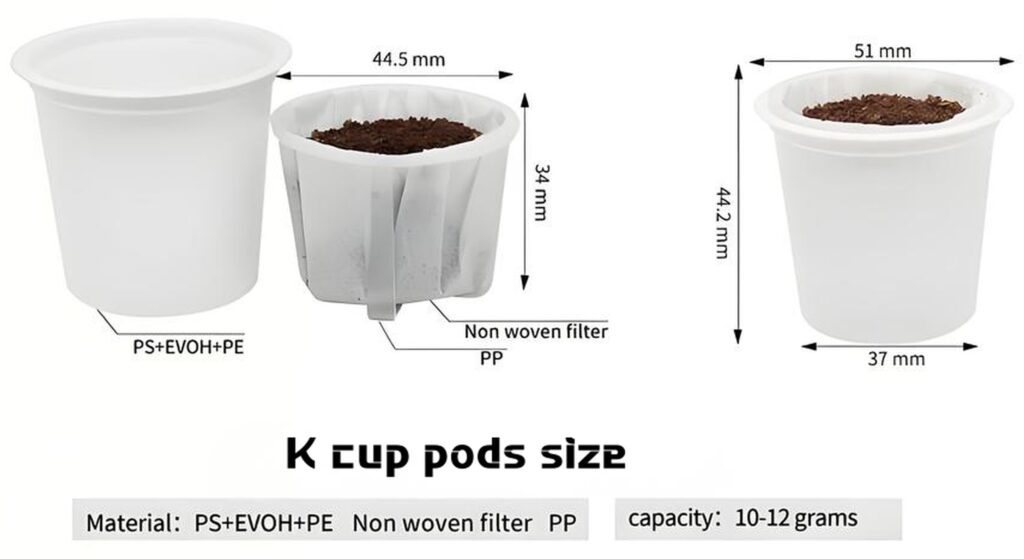
따라서 K-pod 또는 K-Cups(K-Cup은 Keurig 포드의 공식 브랜드 이름이지만 두 용어는 종종 같은 의미로 사용됨)에 대해 이야기할 때 특정 형식에 대해 이야기하는 것입니다. 이 표준화(Insight 1)가 핵심입니다. 이는 다양한 Keurig 시스템 간의 호환성을 보장합니다. 그러나 그 표준 크기 안에는 놀랍도록 복잡한 작은 패키지가 들어 있습니다. 단순한 플라스틱 컵이 아닙니다.
일반적인 K-Cup은 여러 구성 요소로 구성됩니다(통찰 2).
- 컵: 이것은 단순한 플라스틱이 아닙니다. 흔히 7층 공압출 플라스틱 쉘입니다. 왜 그렇게 복잡합니까? 이 층은 산소, 습기 및 빛에 대한 높은 장벽을 만들어 커피 내부를 오랫동안 신선하게 유지합니다. 이 특수 플라스틱은 단순한 용기보다 가격이 더 비쌉니다. 빈 컵 껍질은 필터가 사전 설치되어 있어도 재료와 기본 성형 비용만 약 $0.05 정도입니다.
정밀 가공된 #7 복합 플라스틱(FDA 21 CFR 177.1520 준수)의 가격은 2024년에 파운드당 $2.42입니다. 이는 표준 커피백 재료의 3.6배에 해당하며 각 포드 가격의 38%를 차지합니다.
- 필터: 컵 안에는 보통 부직포나 종이로 만들어진 필터가 들어있습니다. 이는 추출 중에 물이 고르게 흐르도록 하면서 커피 찌꺼기를 잡아주는 역할을 합니다. 컵 내부에 정밀하게 용접되거나 부착되어야 합니다.
- 커피: 8~13g의 분쇄 커피가 포드를 채웁니다. 이곳의 비용은 사용된 원두의 종류와 품질에 따라 크게 다릅니다.
- 뚜껑: 알루미늄 호일 뚜껑은 플라스틱 컵의 상단 테두리에 열 밀봉됩니다. 이는 최종 밀폐 밀봉을 제공합니다. 호일 자체의 가격은 개당 약 $0.01입니다.
따라서 커피를 추가하기 전에도 특수 빈 포장 구성 요소가 포드의 기본 비용에 상당한 영향을 미칩니다. 커피, 제조, 브랜딩을 추가하면 가격이 더욱 올라갑니다. 크기는 표준이지만 내부 구조는 신선도와 추출 성능을 고려하여 설계되어 단순한 커피 봉지에 비해 비용이 높습니다.
K-Cup 포드는 몇 번이나 사용할 수 있나요?
비용을 살펴보면 K-Cup을 재사용할 수 있는지 궁금하실 겁니다. 한 잔 이상의 맥주를 마시는 것이 돈을 절약하는 쉬운 방법인 것 같죠?
표준 K-Cup 포드는 일회용으로만 설계 및 제작되었습니다. 재사용 가능한 K-Cup 필터가 있지만 일회용 포드 자체는 안전 및 품질상의 이유로 두 번 이상 사용해서는 안 됩니다.
I get asked this sometimes – can you just run water through the same K-Cup again? The simple answer is no, and here's why. The system is designed for one extraction. The amount of coffee, the grind size, and the pod structure are all optimized to deliver a specific taste profile in a single brew cycle. Trying to reuse it will result in a weak, watery, and generally unpleasant cup of coffee because all the desirable flavor compounds were extracted the first time.
Furthermore, the pod is physically altered during brewing. The machine punctures the foil lid and the bottom of the plastic cup to allow water flow. Reusing a punctured pod could lead to grounds leaking into your coffee or even potentially damaging the brewer mechanism.
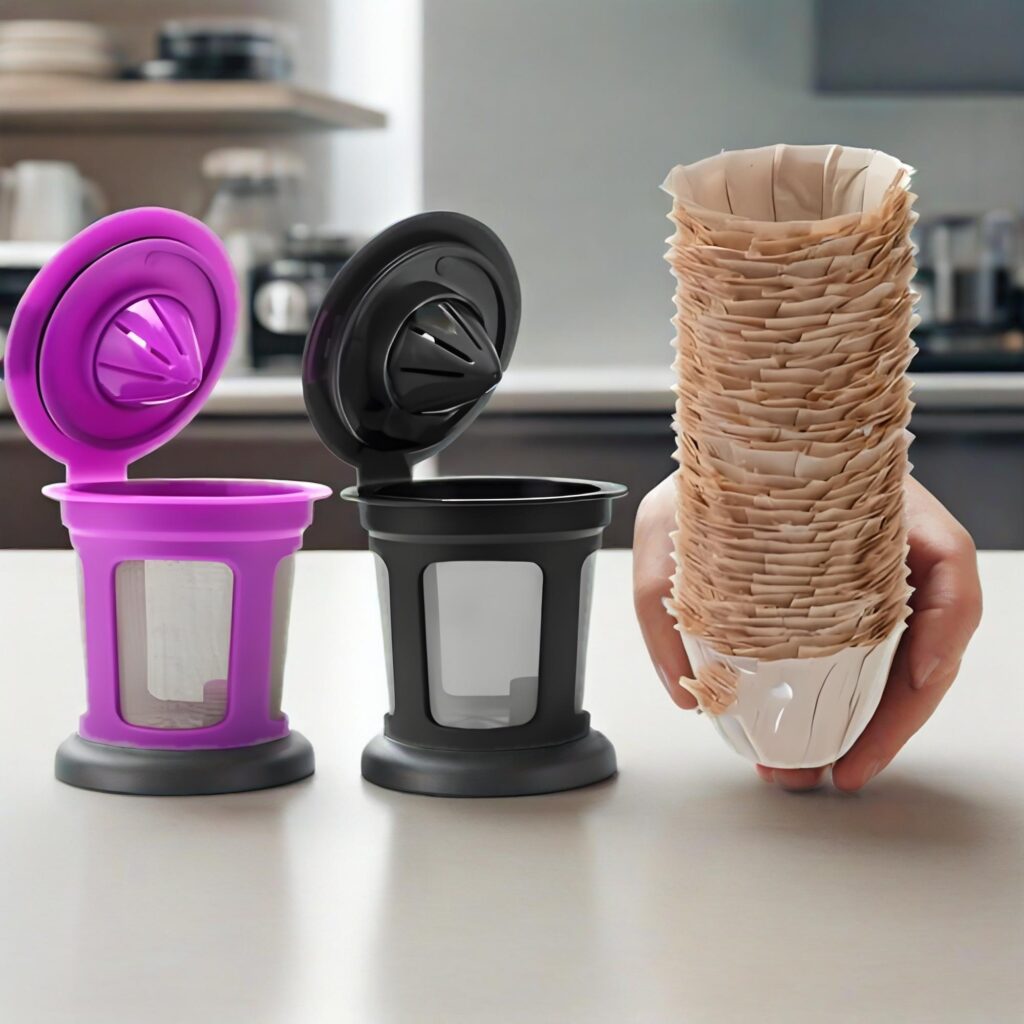
However, if reducing waste and cost is your goal, there's a good alternative: reusable K-Cup filters (Insight 4). These are essentially empty filter baskets shaped like a K-Cup that you fill with your own ground coffee. You use it, empty the grounds, rinse it, and it's ready for the next cup. This definitely lowers the cost per cup and reduces waste. The trade-off? You lose some of the convenience – you have to handle ground coffee and clean the filter after each use, which is precisely the work single-use pods eliminate. So, while the disposable pods are strictly single-use, reusable options cater to those prioritizing cost and environmental factors over maximum convenience.
Keurig보다 더 나은 옵션이 있습니까?
Keurig is popular, but is it the best choice? High pod costs and environmental concerns might make you look for alternatives. Let's explore if other systems offer better value.
"Better" depends on your priorities. Nespresso offers espresso-style pods (often recyclable aluminum), drip machines are cheaper per cup, and French presses offer control. Keurig excels in convenience and flavor variety.
When considering alternatives to Keurig and its K-Cups, "better" really depends on what you value most: cost, convenience, coffee style, or environmental impact. Let's compare:
- 네스프레소: Often seen as the other major pod system. Nespresso focuses on espresso and espresso-based drinks. Their pods are typically aluminum, which is highly recyclable 만약에 you use their recycling program. The cost per pod can be similar to or slightly higher than K-Cups, and the coffee style is different (stronger, smaller servings).
- Traditional Drip Coffee Makers: These are the classic countertop machines. The cost per cup using ground coffee is significantly lower than K-Cups (Insight 5). You can brew larger quantities at once. The downside is the lack of single-serving convenience, the need for measuring coffee, potentially longer brew times, and more cleanup.
- French Press / Pour Over: These manual methods offer excellent control over the brewing process and are very inexpensive after the initial equipment purchase. Cost per cup is low (just ground coffee). However, they require the most effort and time – grinding beans, heating water, timing the brew, and significant cleanup.
- Other Pod Systems: Brands like Lavazza have their own pod systems, often plastic-based like K-Cups, competing in a similar space.
So, is there a better option?
- If lowest cost per cup is key, drip coffee or manual methods win.
- If you prefer 에스프레소, Nespresso might be better.
- If maximum convenience and variety are paramount, Keurig is hard to beat. K-Cups offer an enormous range of coffee brands, flavors, and even other beverages like tea or hot cocoa (Insight 3), arguably the widest selection available in any pod format.
Keurig's strength, and part of why people pay the premium, lies in its unmatched blend of speed, ease, and choice. Whether another option is "better" depends entirely on balancing those factors against cost and coffee preference.
분쇄 커피나 K컵을 사는 것이 더 저렴합니까?
Let's talk straightforward cost: which hits your wallet harder? Comparing the price per cup directly helps justify or question the K-Cup premium.
Buying ground coffee and brewing it traditionally is almost always cheaper per cup than using K-Cups. You pay a significant premium for the convenience and single-serving format of K-Cups.
This is a pretty clear-cut comparison (Insight 5). When you break down the cost, making coffee from a bag of ground beans is much more economical than using K-Cups. Let's look at typical numbers (these can vary widely, but illustrate the point):
- K-Cups: Often range from $0.50 to $1.00+ per pod, depending on the brand and quantity purchased.
- Ground Coffee: A standard 12-ounce bag might cost $8-$15 and yield roughly 30-40 cups (depending on brew strength). This puts the cost per cup somewhere between $0.20 and $0.50.
Clearly, on a per-cup basis, ground coffee wins the price battle, often costing less than half as much as a K-Cup. So why do people pay the K-Cup premium? It boils down to convenience and time.
Making coffee with ground beans involves:
- Getting out the coffee maker.
- Measuring scoops of coffee.
- Dealing with filters (paper or reusable).
- Waiting for a pot to brew (often several minutes).
- Cleaning the carafe, filter basket, and disposing of grounds.
Making coffee with a K-Cup involves:
- Putting a pod in the machine.
- Pressing a button.
- Waiting about a minute for your coffee (Insight 5).
- Tossing the used pod.
For many people, the time saved and the elimination of prep and cleanup are worth the extra cost per cup. You're essentially paying for speed, ease, and zero mess. Whether that trade-off is worth it is a personal calculation, but purely from a cost-of-goods perspective, ground coffee is the cheaper option.
공장에서 K-Pod를 생산하는 과정은 어떻게 되나요?
Ever wonder how millions of K-Cups get made? Understanding the manufacturing complexity adds perspective to the final price. It's more involved than just putting coffee in a cup.
Producing a K-Cup involves a high-speed, automated process: loading empty cups, precisely filling them with coffee, flushing with nitrogen for freshness, sealing with a lid, and quality checks throughout.
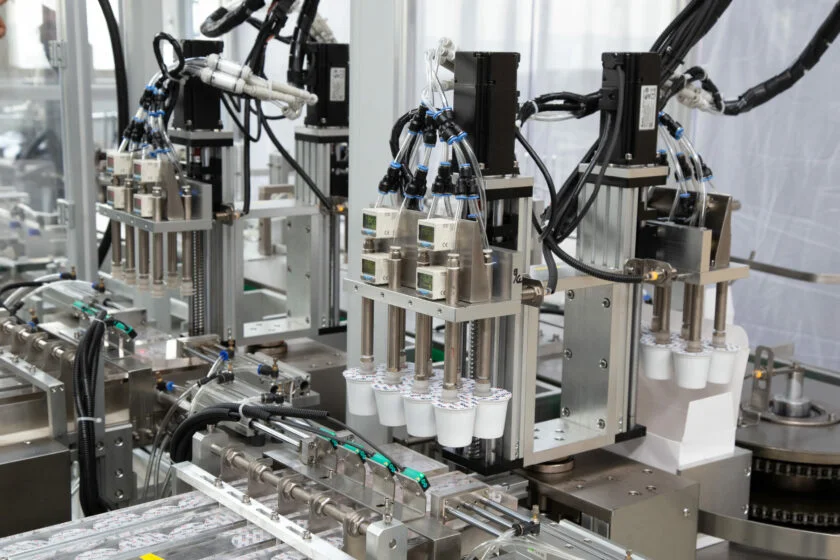
Having been involved in designing and building packaging machinery for years, I know that producing something like a K-Cup consistently and at scale requires sophisticated automation (Insight 6). Here’s a typical factory process:
- Empty Cup Loading: Pre-formed plastic cups (often with the filter already integrated, costing ~$0.05 each as mentioned) are automatically fed into carrier plates on a rotary or linear machine. Advanced machines use sensors to ensure a cup is present before proceeding [^4].
- Coffee Filling: An auger filler or similar dosing system measures a precise amount of ground coffee (8-13g) and dispenses it into the cup. Accuracy is crucial for consistent taste and cost control. This step often happens under a nitrogen gas flush.
- Nitrogen Flushing: This is critical for shelf life. Before sealing, the air inside the pod (which contains oxygen that stales coffee) is replaced with nitrogen, an inert gas[^1]. This process might happen at the filling station and just before sealing to minimize oxygen exposure.
- 뚜껑 배치 : Pre-cut foil lids (~$0.01 each) are picked from a stack and precisely placed onto the filled cups. Sensors might check for lid presence before sealing[^4].
- Heat Sealing: A heated sealing head presses the foil lid onto the plastic cup rim, creating an airtight seal. Temperature, pressure, and dwell time must be carefully controlled for a perfect seal without damaging the cup or coffee.
- Ejection & Quality Control: Finished pods are ejected. High-end lines might include checkweighers to verify fill weight, vision systems to inspect seal integrity, or date coding systems. Defective pods are automatically rejected[^4].
This entire process happens at high speeds, often producing hundreds of pods per minute. The machinery involved is complex, requires significant investment, needs maintenance, and must meet food safety standards. Automation, quality control measures like nitrogen flushing[^1], and the sheer speed required all contribute to the manufacturing overhead, which gets factored into the final price of each K-Cup pod.
결론
K-Cups are expensive due to their complex packaging, the coffee inside, the sophisticated manufacturing process ensuring freshness and consistency, and the significant convenience premium they offer compared to traditional brewing methods.